Community Medicine
Department of Community Medicine
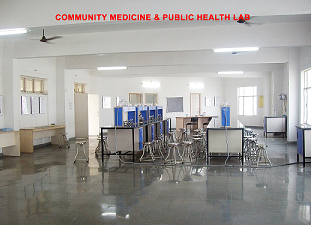
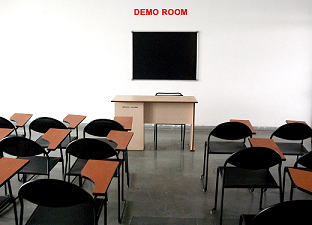
The community medicine department has the unique distinction of being the only department which takes a medical student to the community. Community medicine is an essential component of the undergraduate medical curriculum. It is a two-and-a-half-year course (3rd to 7th semesters) and forms a part of one of the subjects of clinical sciences of MBBS. The department simultaneously caters to the academic needs of undergraduate and postgraduate students of community medicine as well as its intersemesters. Teaching is conducted at both the undergraduate and postgraduate levels, ensuring that the education in the subject is of the highest standard. The teaching and research undertaken in the Department of Community Medicine are both supported by well-equipped facilities. The department is also actively involved in reinforcing skills of postgraduate students of all specialities in the areas of research methodology and biostatistics.
Objectives of the Department of Community Medicine:
The primary objective of the Department of Community Medicine is to train the Undergraduate Medical students as Primary Health Care Physicians so that, by the end of the training, they should be able to
- Perform early diagnosis and treatment (using essential drugs) for the locally endemic health problems in the community.
- Provide health education (including counselling) to all the patients who are treated by them.
- Provide preventive and promotive health care to the most vulnerable sections of society, for example, children under five years of age, children in urban slums, pregnant women, adolescent girls and elderly persons.
- Take active participation in the national health programmes even if they choose to be private practitioners.
- Use their knowledge of infectious disease epidemiology in preventing the spread of disease from person to person within the family and from person to in the community.
- Use their knowledge of general epidemiology in planning and conducting community-based research of good quality.
- Provide preventive, promotive and curative health care to the workers in the various occupations (Occupational Health).
- Play the role of a friend, philosopher and guide to every individual (be it a patient or a community member) so that whosoever comes in contact is motivated to bring a health-promoting change in the lifestyle.
The department has highly qualified and able faculty to impart academic training to the undergraduates as well as postgraduates. We have fourteen faculty members who are qualified and well trained in various areas of academics and research.
Facilities/Services
The department has adequate teaching, training and research facilities for students to enable them to provide comprehensive, promotive, preventive and curative services to the community through its Rural and Urban Health Training Centres.
- The Rural Health Training Centre is situated at Sarai Akbarabad, Satrikh, which is about 12 km from the Hind Institute of Medical Sciences, Safedabad. Over 4050 families are registered, covering a population of about 23177 people.
- The Urban Health Training Centre is located in Indira Nagar, Lucknow, about 15 km from the Hind Institute of Medical Sciences, Safedabad. About 4376 families are registered in the defined area covering a population of 22766 with a view to providing basic health services as well as training our undergraduates, postgraduate students and interns.
Health activities at both the centres include regular outpatient services, antenatal care, immunisation, family welfare services, health education sessions, and distribution of iron and folic acid tablets to pregnant and lactating women and vitamin A syrup to the children, which are part of the activities carried out by the centres. Facilities for routine investigations are available at the laboratories in these centres. These services are also provided in the community through a team of doctors, medical social workers, auxiliary nurses, midwives, health inspectors and health educators.
Research
The postgraduate course in community medicine at HIMS was started in 2013. Some of the current ongoing research projects are:
- An epidemiological study of hypertension in a rural population in Barabanki District.
- A study of psychosocial and health-related issues among elderly people in a rural area of Barabanki District.
- Risk factors of non-communicable diseases in a rural population in Barabanki District.
- A study on overweight and obesity among school-going adolescent girls of Barabanki district The following projects have been completed in 2015: -
- A clinico-epidemiology study of obesity in a rural population of District Barabanki, Uttar Pradesh.
The Department runs various community-based projects apart from its academic and social development activities. To name a few:
- The International Planned Parenthood Federation (IPPF) funded the "Integrated Family Development Project" (1987-1995)
- The Govt of India-MOH&FW funded "Reproductive & Child Health Project" (1999-2004)
- The WHO-AIIMS "Surveillance of Cardiovascular Risk Factors & educational intervention project"
- The Bill & Melinda Gates WHO IARC "Cervical cancer Screening cum RCT of Single Freeze Vs Double Freeze Cryotherapy" (2003-2005)
- The USAID-APAC Project for prevention & control of HIV/AIDS: "Continuing Education & Training Center" and "PSG AIDS Infotech Center & Website (www.psgaidsinfo.org)"
- Prevalence of ocular morbidity among the rural population of District Barabanki with special reference to healthcare-seeking behaviour.
Statistical Unit
A statistical unit which is also functional in the department for PG students & faculty members. The unit has computer, internet and printing facilities and for statistical analysis.
Museum
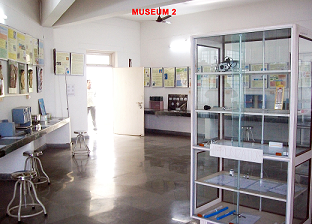
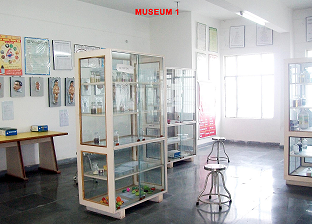
The department has got a well-developed museum having various models, charts, equipment, etc. for teaching medical students in community medicine.
Community Medicine Society:
The department is also having a Community Medicine Society to improve the understanding of concepts of community medicine and allied sciences during the undergraduate course. The membership is open to the students of the 1st to 7th-semester MBBS students and postgraduates of the department.
FACULTY
| S.No. | Faculty Name | Designation | Employment Type |
|---|---|---|---|
| 1 | Dr. Meenakshi Singh | Professor & HOD | Regular |
| 2 | Dr. Ankur Shrivastava | Professor | Regular |
| 3 | Dr. Bhupesh Kumar Kori | Professor | Regular |
| 4 | Dr. Zainab Khan | Associate Professor | Regular |
| 5 | Dr. Divyata Sachan | Assistant Professor | Regular |
| 6 | Dr. Shwetambri Srivastava | Assistant Professor | Regular |
| 7 | Dr. Arunima Saini | Assistant Professor | Regular |
| 8 | Mr. Aslam Ansari | Statistician cum- Assistant Professor | Regular |
| 9 | Dr. Tapan Verma | Senior Resident | Regular |
| 10 | Dr. Pranav Kumar Dwivedi | Tutor | Regular |
| 11 | Dr. Abhishek Shukla | Tutor | Regular |
| 12 | Dr. Manish | Tutor | Regular |
| 13 | Dr. Anu | Tutor | Regular |
| 14 | Dr. Kavisha Raghuvanshi | Tutor | Regular |
| 15 | Dr. Shifa Siddiqui | Tutor | Regular |
Research Publications (PDF)